I’ve spent a good chunk of my career listening to customer calls. Not the polished demo calls. The real ones. Angry ones. Confused ones. The kind where someone sighs before they even say hello.
And for years, voice technology was the villain of that story.
You know the drill. “Press 1 for billing.” “Press 2 for support.” “Sorry, I didn’t get that.”
Traditional IVR systems trained users to lower their expectations. They didn’t feel heard. They felt processed.
So when AI voice agents entered the conversation, I was skeptical. Deeply. I’d seen too many “smart” systems that were anything but. But something changed. Not overnight. Not magically. Slowly. Methodically.
AI voice agents stopped acting like menus and started behaving like listeners.
That’s the real shift. And that’s what actually enhances user experience.
How AI Voice Agents Work
Before we talk experience, we need to talk mechanics. Because bad UX almost always traces back to misunderstood tech.
AI voice agents aren’t one thing. They’re a system of parts working together in real time during customer calls.
Speech Recognition
This is where everything begins.
Speech recognition AI converts spoken language into text. Early systems struggled with accents, pacing, background noise. Modern models? Much better. Not perfect. But capable enough to handle real conversations, not just rehearsed phrases.
When speech recognition fails, experience collapses. When it works, users don’t notice it at all. That’s the goal.
Natural Language Processing (NLP)
Once words become text, NLP steps in to understand intent.
Not keywords. Intent.
There’s a massive difference between:
- “I want to cancel my plan”
- “I’m thinking of leaving”
- “This service isn’t working for me”
To a human, these are variations of the same problem. To older systems, they were dead ends. Conversational AI voice agents read between the lines. They track meaning, not syntax.
(This is where most demos lie, by the way.)
Machine Learning & Context Awareness
Context is memory. And memory is respect.
Modern AI voice agents remember what was said earlier in the call. Sometimes even across calls. They don’t ask you to repeat your account number three times. They adapt.
Machine learning allows these systems to improve based on outcomes, what resolved the issue, what escalated it, what led to silence.
That’s how AI-driven customer interactions stop feeling robotic.
The Role of AI Voice Agents in Enhancing User Experience
Here’s the blunt truth.
AI voice agents don’t improve user experience because they’re AI. They improve it because they remove friction.
When designed well, voice-enabled AI solutions:
- Reduce effort
- Respect time
- Respond like a capable human would
User experience isn’t about delight. It’s about relief.
And relief comes from being understood quickly.
Human-like voice AI isn’t about sounding human. It’s about behaving human. Listening. Responding. Adjusting.
That’s the difference.
Key Benefits of AI Voice Agents for Businesses
Faster Response Times
Speed matters. Especially when users are already annoyed.
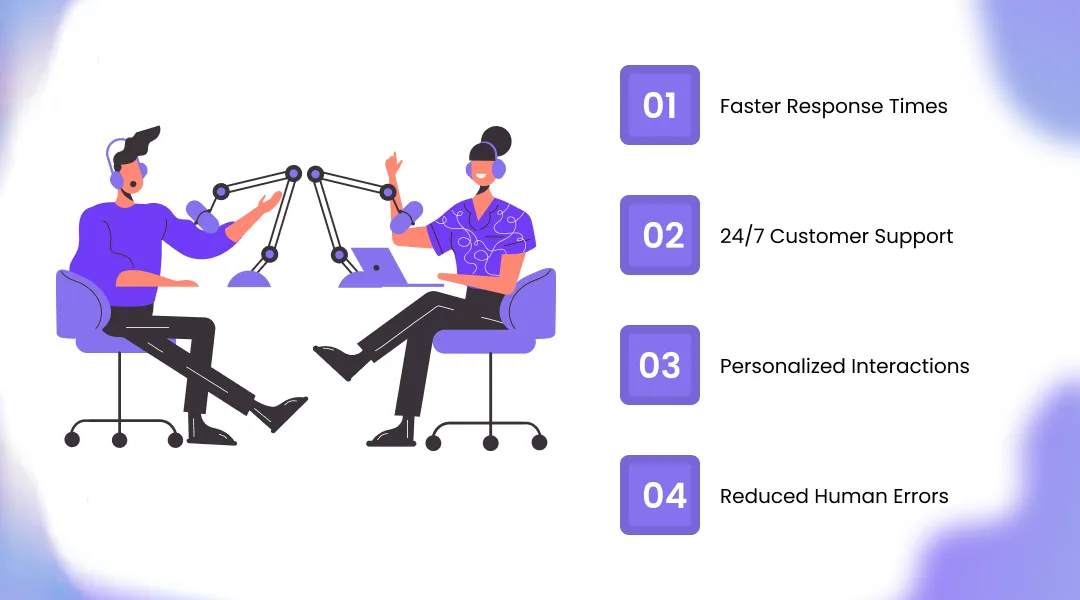
AI call automation means no queues. No transfers. No waiting for the “right department.” The right response happens immediately.
That alone changes how users perceive a brand.
24/7 Customer Support
People don’t have problems on schedules.
AI voice agents in contact centers operate without fatigue. Midnight billing issues. Early-morning appointment reschedules. Emergency service requests.
Always available. Consistently functional.
Personalized Interactions
This one’s misunderstood.
Personalization isn’t about using someone’s name. It’s about relevance. AI-powered voice assistants can reference previous customer calls, known preferences, recent actions.
That context removes repetition. And repetition is UX poison.
Reduced Human Errors
Humans make mistakes. Especially under pressure.
Intelligent voice agents don’t forget policies. They don’t misquote pricing. They don’t skip steps. For regulated industries, this matters more than charm.
AI Voice Agents vs Traditional IVR Systems
Let me be very clear.
IVR systems were built for companies. AI voice agents are built for users.
IVRs follow trees. Voice AI follows conversations.
IVRs demand compliance. Voice AI adapts.
IVRs ask users to learn the system. AI voice assistants learn the user.
If you’ve ever wondered why your IVR drop-off rates are high, this is why.
Use Cases of AI Voice Agents Across Industries
Healthcare
Healthcare doesn’t forgive confusion.
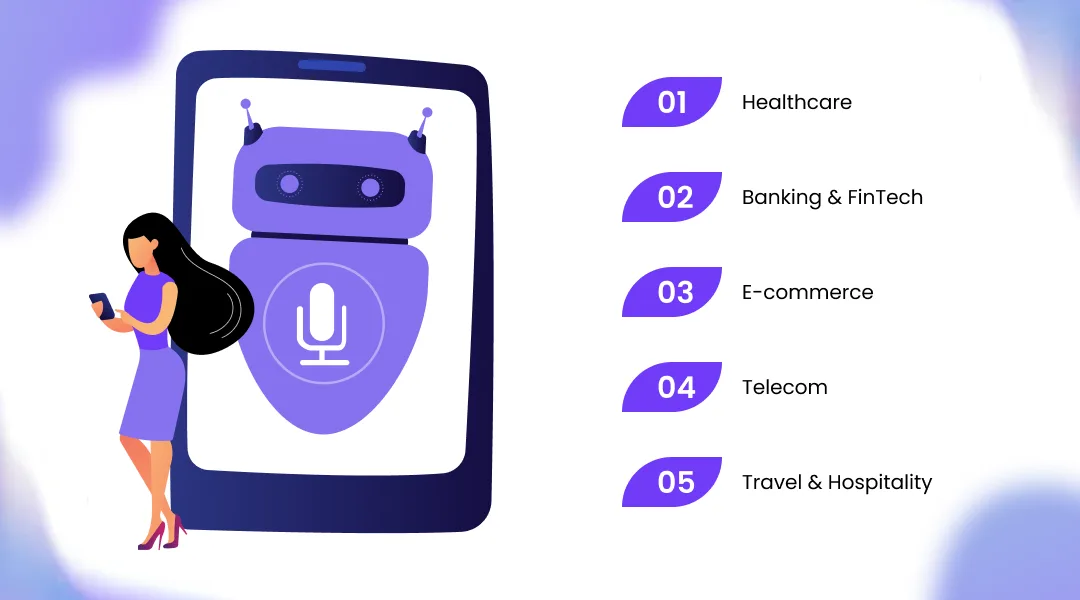
AI voice agents handle appointment scheduling, reminders, follow-ups, and basic triage without exposing sensitive data. When implemented correctly, they reduce staff load while improving patient trust.
And yes, security matters here. A lot.
Banking & FinTech
Voice AI for customer service in finance focuses on verification, balance checks, transaction alerts, and fraud reporting.
Speed plus accuracy equals confidence. That’s what customers remember.
E-commerce
Order tracking. Returns. Payment issues. High-volume, repetitive requests.
AI voice bots thrive here. They reduce inbound pressure while keeping customers informed in real time.
Telecom
Telecom support is notoriously complex.
Voice AI customer engagement helps diagnose issues faster, route intelligently, and resolve without escalation. Fewer angry calls. Fewer agent burnouts.
Travel & Hospitality
Booking changes. Cancellations. Delays.
AI phone calls handle the chaos when human teams are overwhelmed. Calm, consistent responses matter when plans fall apart.
How AI Voice Agents Improve Customer Satisfaction & Retention
Retention isn’t emotional loyalty. It’s remembered ease.
Customers stay with brands that don’t waste their time.
When automated voice support resolves issues quickly, users associate the brand with competence. Not warmth. Competence.
And competence builds trust.
I’ve seen companies reduce churn simply by fixing their voice experience. No pricing changes. No campaigns. Just fewer frustrating calls.
Challenges & Limitations of AI Voice Agents
Let’s talk about what breaks.
AI voice agents struggle with:
- Highly emotional conversations
- Ambiguous intent without context
- Poorly integrated backend systems
They also fail when companies treat them like plug-and-play tools.
Bad data in. Bad experience out.
Voice AI is not a replacement for human empathy. It’s a filter. It handles the predictable so humans can handle the personal.
Ignore that balance, and users will notice.
Immediately.
Best Practices for Implementing AI Voice Agents
I’ve seen this go wrong more times than I can count. So here’s what actually works:
- Start with one clear use case
- Integrate deeply with existing systems
- Design conversations, not scripts
- Test with real customer calls
- Measure resolution, not containment
If you’re planning to hire AI voice agents or evaluating the best AI voice agent platform, focus less on features and more on outcomes.
Tools don’t create experience. Design does.
Future of AI Voice Agents in User Experience Design
The future isn’t louder voices or flashier demos.
It’s quieter systems that resolve problems before users escalate.
Voice assistant technology will move toward:
- Proactive outreach
- Multimodal continuity
- Deeper personalization with consent
And the best implementations will be invisible.
When users don’t remember the call, that’s success.
Conclusion
AI voice agents aren’t here to impress anyone.
They’re here to fix something that’s been broken for years.
When built with intention, transparency, and respect for users, they transform customer calls from obstacles into outcomes.
Companies like OnDial understand this because they build with partnership in mind—not performance theatre.
User experience isn’t about sounding smart.
It’s about being helpful.
Every time the phone rings.