I’ll start with something blunt.
Most hotels don’t have a demand problem. They have a response problem.
I’ve seen it firsthand, calls ringing during peak hours, front desk juggling check-ins, and that one missed call? It was a booking. Gone.
Now ask yourself this: How many bookings did you lose last month because no one answered in time?
Not tracked, right? Exactly.
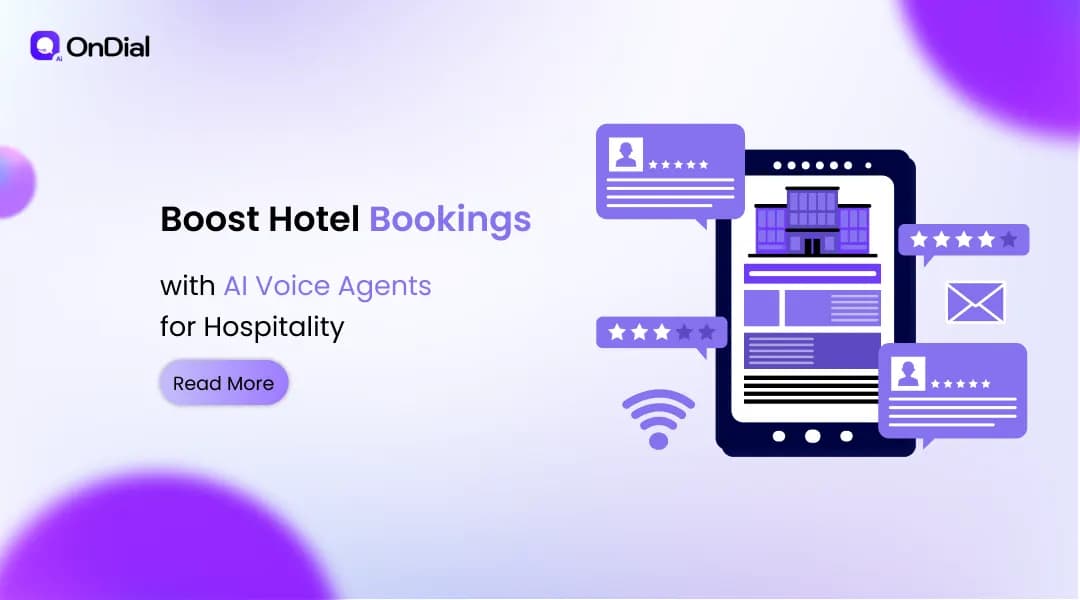
This is where AI voice agents for hospitality stop being a “tech upgrade” and start becoming a revenue recovery system.
What Are AI Voice Agents for Hospitality?
Think of an AI voice agent as your best front desk employee… who never sleeps, never forgets, and never gets overwhelmed.
It answers calls. Talks like a human. Understands intent. Books rooms.
No scripts. No robotic menus. Just conversation.
How AI voice agents work in hotels
Here’s the simplified version (no jargon, I promise):
- Guest calls your hotel
- AI answers instantly
- It understands what the guest wants (availability, pricing, booking)
- Connects with your booking system
- Confirms reservation in real-time
And yes, it can handle multiple calls at once.
Why Hotels Are Losing Bookings Today
This part? It’s uncomfortable. But necessary.
Missed calls and delayed responses
If a guest calls and no one answers within 20–30 seconds, they don’t wait.
They move on. Usually to your competitor.
Lack of 24/7 availability
Guests don’t follow your business hours.
Late-night planners. Early-morning travelers. International time zones.
Your front desk? Human. Limited.
Language barriers
India alone has dozens of major languages. Add international guests, and things get messy.
Miscommunication = lost trust = lost booking.
How AI Voice Agents Boost Hotel Bookings
Now we get to the part that actually matters: results.
24/7 instant response system
No rings. No waiting. No frustration.
Every call gets answered. Immediately.
That alone can recover a shocking percentage of lost bookings.
Automated booking handling
The AI doesn’t just “assist.”
It completes bookings.
Collects details. Checks availability. Confirms rooms.
Done.
Lead qualification and conversion
Not every caller is ready to book.
But a smart AI identifies intent:
- Curious → gives info
- Interested → pushes availability
- Ready → closes booking
It’s subtle. But effective.
Multilingual guest support
English. Hindi. Gujarati. Tamil. Even foreign languages.
The AI adapts.
Key Benefits of AI Voice Assistants for Hotels
Let’s translate features into outcomes.
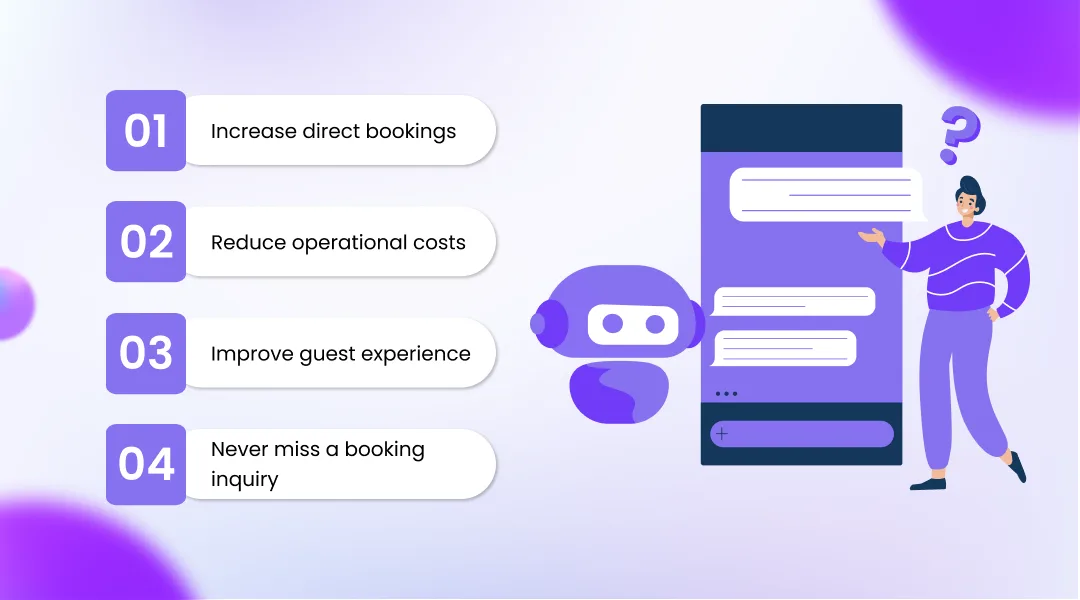
Increase direct bookings
More calls answered = more direct bookings.
Less dependency on OTAs. More margin in your pocket.
Reduce operational costs
One AI agent can handle what 3–5 staff members typically manage.
Without salaries, shifts, or burnout.
Improve guest experience
Instant answers. No hold music. No confusion.
Guests remember that.
Never miss a booking inquiry
This is the big one.
Missed calls drop to zero.
Zero
AI Voice Agents vs Traditional Hotel Staff
Let’s not pretend this is a fair fight.
Speed comparison
- Human: 3–5 calls at peak (with stress)
- AI: Unlimited simultaneous calls
Cost comparison
- Human: Monthly salary + training + attrition
- AI: Fixed cost, scalable
Efficiency and scalability
Here’s the real difference:
Humans scale linearly. AI scales infinitely.
Real Use Cases in Hospitality Industry
This isn't a theory. I’ve seen these deployed.
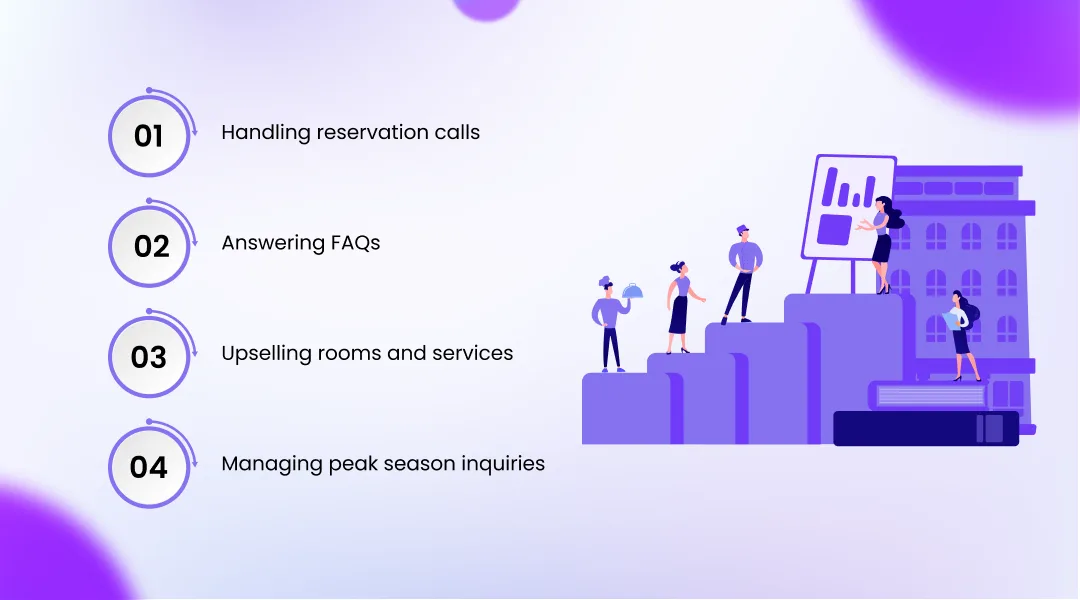
Handling reservation calls
From inquiry to confirmation, without human involvement.
Answering FAQs
Room pricing. Availability. Amenities.
Done instantly.
Upselling rooms and services
“Yes, we have a deluxe room with sea view for just ₹1,200 more…”
AI doesn’t forget to upsell. Ever.
Managing peak season inquiries
Festivals. Holidays. Events.
When the call volume spikes, AI doesn’t break.
Features to Look for in a Hotel AI Voice Agent
Not all AI is worth your money. Be careful.
Natural human-like conversation
If it sounds robotic, guests hang up.
Simple.
CRM & booking system integration
If it can’t connect to your PMS or CRM, it’s useless.
No integration = no automation.
Multilingual support
Non-negotiable in hospitality.
Analytics and reporting
You should know:
- How many calls handled
- Conversion rates
- Missed opportunities
If you can’t measure it, you can’t improve it.
How to Implement AI Voice Automation in Hotels
This part scares people. It shouldn’t.
Step-by-step adoption guide
- Identify call volume and gaps
- Choose a tailored solution (not generic)
- Integrate with booking system
- Train AI with your data
- Go live and monitor
Integration with existing systems
Good AI doesn’t replace your system.
It plugs into it.
That’s the difference between hype and something that actually works.
Future of AI in Hospitality Industry
Let me say something slightly controversial.
Voice will become the primary interface in hospitality.
Not apps. Not forms. Voice.
Smart hotels and automation trends
Room controls. Concierge services. Booking. All voice-driven.
Voice-first customer experience
Guests don’t want to “navigate.”
They want to ask.
And get answers.
Instantly.
Conclusion
I’ve worked with enough hotels to know this:
Most revenue loss doesn’t come from bad marketing.
It comes from broken communication.
Missed calls. Slow responses. Language gaps.
Fix that—and bookings increase.
That’s exactly what AI Voice Agents for Hospitality solve.
Not theoretically.
Practically.