I’ve worked with dozens of startups and small companies over the past decade. Different industries. Different products. Different ambitions.
Yet one problem appears again. And again. And again.
Missed phone calls.
A plumber misses a call while fixing a pipe. A clinic receptionist gets overwhelmed during peak hours. A real estate agent is showing a property while a potential buyer calls.
And what happens next?
The caller hangs up. They try the competitor.
Just like that… a lead disappears.
Here’s the truth most business owners realize too late:
Phone calls are still one of the highest-intent customer actions.
When someone calls your business, they’re not casually browsing. They’re ready to talk. Ready to book. Ready to buy.
So the question becomes simple.
Who answers when you can’t?
That’s where the best call answering system for small business changes everything.
Let me walk you through it.
What Is a Call Answering System?
Let’s strip the jargon away.
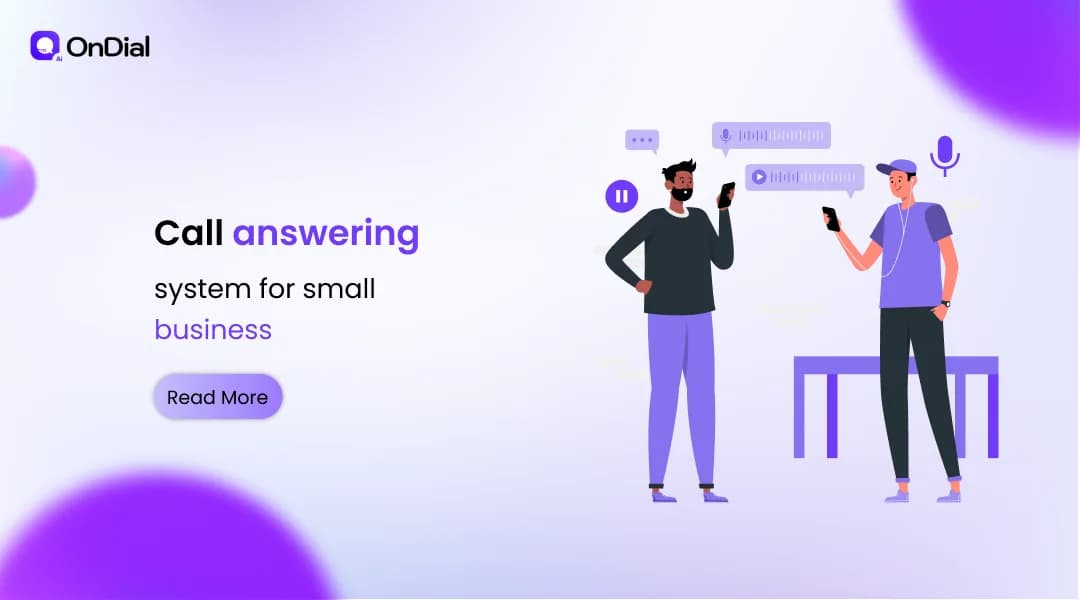
A call answering system is simply a technology that answers incoming business calls when a human cannot.
That’s it.
But modern systems do far more than just say “Press 1 for sales.”
Basic explanation
A small business call answering system can:
- Answer incoming calls automatically
- Route calls to the right department
- Collect customer information
- Book appointments
- Capture leads
- Provide basic information
Think of it as a digital front desk for your business.
How it works
Here’s the simplified version of what happens behind the scenes:
- A customer calls your business number
- The system answers immediately
- It understands the request
- It routes the call or records the details
Older systems relied on rigid menus.
Newer AI phone answering systems? They actually understand conversations.
Which brings us to something interesting.
A caller might say:
“Hi, I want to schedule a dental appointment.”
An AI voice assistant can understand that intent and guide the caller accordingly.
No buttons. No confusion. Just conversation.
Why Small Businesses Need a Call Answering System
Let me ask you something.
How many calls does your business miss every week?
Two? Ten? Fifty?
Most business owners underestimate this number.
I once worked with a home service company that tracked their calls for a month.
They discovered something painful.
They were missing 38% of inbound calls.
Thirty. Eight. Percent.
That’s not a phone problem.
That’s a revenue problem.
Never miss leads
When a customer calls, they already have intent.
If no one answers, they rarely leave a voicemail.
They just… move on.
A business phone answering service ensures every call gets a response.
Every time.
Better customer experience
Customers expect quick responses.
Waiting on hold? Frustrating. Calling repeatedly? Even worse.
A smart call answering system responds instantly.
No waiting. No confusion.
24/7 availability
Your business might close at 6 PM.
Customers don’t.
People call during evenings, weekends, even late nights.
An automated call answering system ensures your business stays reachable around the clock.
And yes, those late calls often turn into your best leads.
Types of Call Answering Systems
Not all systems are built the same.
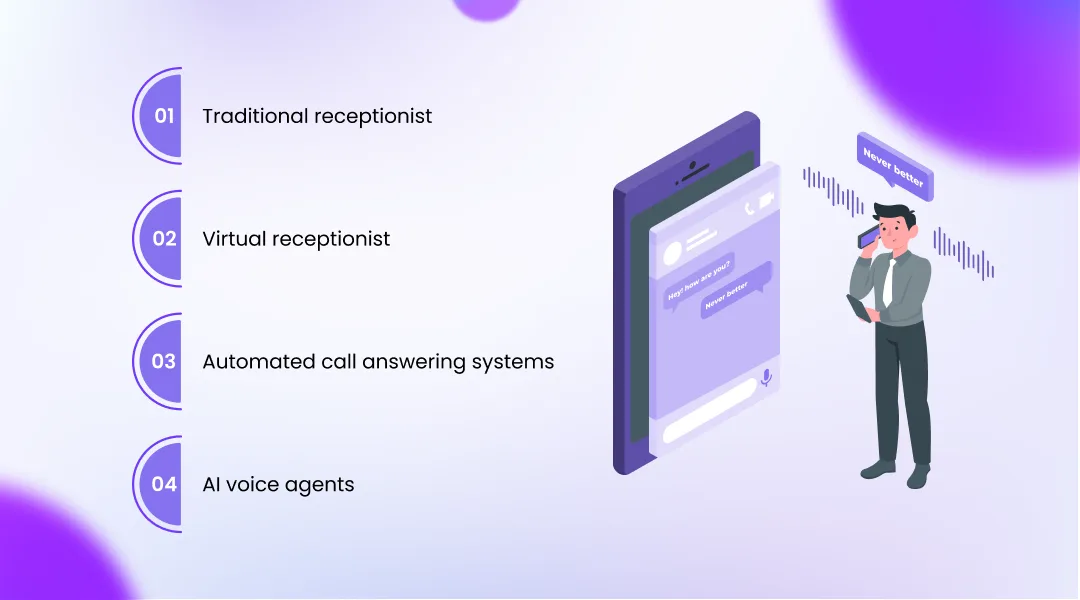
Over the years, I’ve seen four major categories.
Each with its own strengths.
1. Traditional receptionist
The classic model.
A human receptionist answers calls and routes them manually.
Pros:
- Personal interaction
- Flexible conversation
Cons:
- Expensive
- Limited availability
- Human error
2. Virtual receptionist
A virtual call answering service uses remote staff who answer calls on behalf of your business.
Pros:
- Professional call handling
- Human conversation
Cons:
- Monthly service cost
- Limited scalability
3. Automated call answering systems
These are IVR systems.
You’ve probably heard them.
“Press 1 for support. Press 2 for sales.”
Pros:
- Affordable
- Handles call routing
Cons:
- Frustrating customer experience
- Limited flexibility
4. AI voice agents
This is where things get interesting.
An AI voice agent for small business can:
- Answer calls naturally
- Understand customer requests
- Capture information
- Schedule appointments
Instead of menus… callers have conversations.
And yes, it feels surprisingly natural.
Features to Look for in the Best Call Answering System
Not all systems are worth your time.
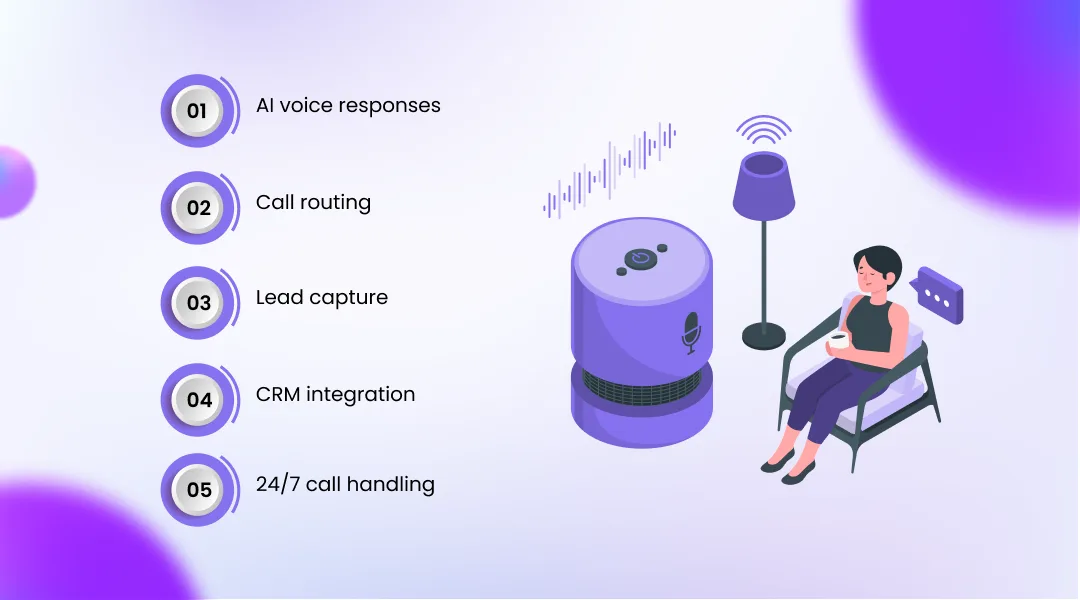
If you’re evaluating call answering software, here are the features that actually matter.
AI voice responses
Modern systems can hold real conversations.
Customers simply speak naturally.
No menus.
No button pressing.
Call routing
Calls should reach the right person quickly.
Whether that’s sales, support, or appointments.
Lead capture
Every call should collect useful information:
- Name
- Phone number
- Service requested
A strong business call automation system ensures no lead disappears.
CRM integration
The system should connect with tools like:
- CRM platforms
- Appointment scheduling software
- Support ticket systems
So customer data flows directly into your business workflows.
24/7 call handling
The best systems work day and night.
Your business stays responsive, even when you’re not available.
Benefits of an AI Call Answering System for Small Business
Here’s where things get practical.
I’ve seen companies switch to AI call answering systems and immediately notice three changes.
Cost savings
Hiring a receptionist can cost thousands per month.
An AI call answering service costs a fraction of that.
Especially for small businesses.
Faster response
AI answers instantly.
No hold music.
No delays.
Customers get immediate attention.
Increased sales opportunities
Every answered call increases the chance of closing a deal.
When calls turn into captured leads… revenue follows.
Simple math.
Best Call Answering System for Small Business in 2026
Let’s talk about the present moment.
Voice AI has evolved dramatically in the last few years.
Modern platforms now combine:
- speech recognition
- natural language understanding
- conversational AI
Together, they create intelligent phone experiences.
Companies like OnDial specialize in building tailored voice AI solutions that handle real customer conversations.
Instead of rigid scripts, these systems adapt to how people naturally speak.
Which matters more than you might think.
Because callers don’t talk like machines.
They pause. Change direction. Ask unexpected questions.
The best systems handle that gracefully.
How to Choose the Right Call Answering System
Choosing a system isn’t about picking the most complex option.
It’s about choosing the right fit for your business.
Start with three factors.
Budget
Costs vary widely.
Traditional receptionist: expensive Virtual receptionist: moderate AI answering system: scalable
Small businesses often benefit from AI because pricing grows with usage.
Business size
A solo consultant may need simple call routing.
A clinic may need appointment scheduling and call triage.
The right system matches your complexity.
Customer call volume
How many calls do you receive daily?
High-volume businesses benefit most from automation.
Low-volume businesses might prefer hybrid systems.
Real Use Cases of AI Call Answering Systems
Let’s bring this down to earth.
Here are three industries where I’ve seen AI call answering systems work incredibly well.
Clinics
Medical clinics receive constant appointment calls.
AI systems can:
- schedule visits
- answer basic questions
- direct urgent cases to staff
Doctors focus on patients. Not phones.
Real estate agencies
Agents are often in meetings or property tours.
AI assistants capture:
- buyer inquiries
- property requests
- callback details
No opportunity gets lost.
Service businesses
Plumbers, electricians, cleaning services.
Calls often come during active jobs.
AI answering ensures:
- booking requests are captured
- emergency calls are prioritized
- customers receive quick responses
It’s like adding a receptionist without hiring one.
Conclusion
Let me leave you with a blunt truth.
Every missed call is a potential lost customer.
Small businesses can’t afford that.
The good news?
Technology finally offers a practical solution.
A modern automated phone answering system ensures every customer hears a response, every lead gets captured, and every opportunity has a chance to convert.
And the best part?
You don’t need a huge team to deliver professional call experiences anymore.
Just the right system.
Sometimes the difference between a struggling business and a thriving one is surprisingly simple.
Someone answering the phone.