Let me start with a confession.
I used to hate automated phone systems.
You know the ones.
"Press 1 for billing. Press 2 for support. Press 3 if you’re already regretting calling."
They felt robotic. Frustrating. Sometimes useless.
And as a developer earlier in my career, I understood why. Those systems weren’t intelligent. They were scripted decision trees pretending to be helpful.
But something changed over the past few years.
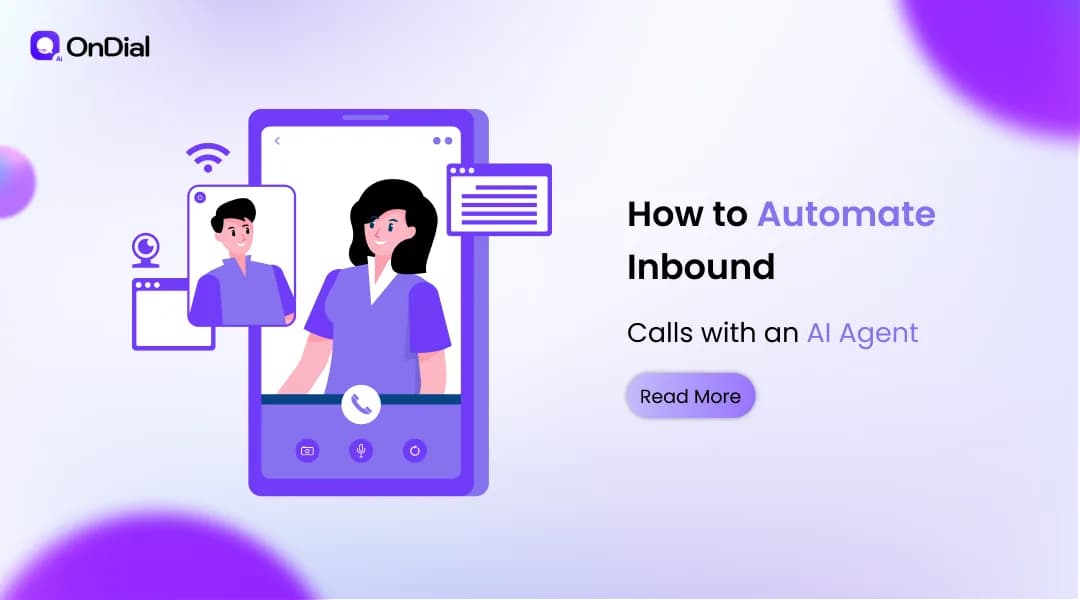
Modern AI inbound call automation isn’t just a smarter phone menu. It’s conversational technology capable of understanding customer intent, responding naturally, and solving problems in real time.
I’ve seen companies go from overwhelmed support teams to calm, efficient operations simply by deploying AI voice agents that answer calls automatically.
Not replacing humans.
Supporting them.
If your business receives hundreds or thousands, of inbound calls every day, this technology isn’t experimental anymore.
It’s operational strategy.
Let’s unpack how it works.
Why Businesses Are Automating Customer Calls with AI
Businesses didn’t suddenly wake up one morning and decide to automate their phone systems.
Pressure built slowly.
Then all at once.
Rising Call Volumes
Customer expectations exploded.
People expect immediate answers. Whether they’re checking order status, booking an appointment, or resolving a billing question.
More customers. More questions. More calls.
Support teams? They didn’t scale at the same speed.
I’ve worked with companies where call queues stretched past 30 minutes. Customers hung up. Agents burned out.
Automation became less of a luxury… and more of a survival tactic.
Cost of Human Agents
Hiring support staff is expensive.
Salary. Training. Infrastructure. Shift coverage.
Multiply that across dozens or hundreds, of agents.
Now imagine half those calls are simple questions like:
- “Where is my order?”
- “What are your business hours?”
- “Can I reschedule my appointment?”
Paying skilled agents to answer repetitive questions isn’t efficient.
That’s where AI call automation for businesses starts to make financial sense.
Need for 24/7 Support
Customers don’t operate on office hours.
They call at night. On weekends. During holidays.
Humans need sleep.
AI doesn’t.
An AI phone answering service can respond instantly, every hour of the day.
Faster Customer Responses
Here’s a blunt truth.
Most customers don’t care who answers their question.
They care about speed.
If AI resolves their issue in 20 seconds instead of waiting 10 minutes for an agent?
They’ll take the faster option.
Every time.
How AI Voice Agents Handle Inbound Calls
Let’s get technical for a moment.
But I’ll keep it human.
When someone calls your business, an AI agent for inbound calls processes the conversation through several layers of intelligence.
Speech Recognition
First step: converting voice into text.
Modern speech recognition systems transcribe conversations almost instantly.
Even with accents. Background noise. Different speaking speeds.
This is the foundation of AI call answering systems.
Natural Language Understanding
Once speech becomes text, the AI needs to understand meaning.
Not just words.
Intent.
For example:
Customer says: "Hey, I ordered shoes last week and haven’t received them."
The AI interprets this as order tracking inquiry.
That’s natural language understanding at work.
Intent Detection
This is where the system categorizes the request.
Common call intents include:
- Order tracking
- Appointment booking
- Billing questions
- Product information
- Support requests
Once the intent is identified, the AI decides what action to take.
Automated Responses and Actions
Now the AI responds.
It might:
- Retrieve order status
- Book an appointment
- Send a payment link
- Answer FAQs
- Transfer to a human agent
The experience feels conversational, like speaking to a knowledgeable assistant.
That’s the magic behind AI voice bots for customer service.
Key Benefits of Automating Inbound Calls with AI
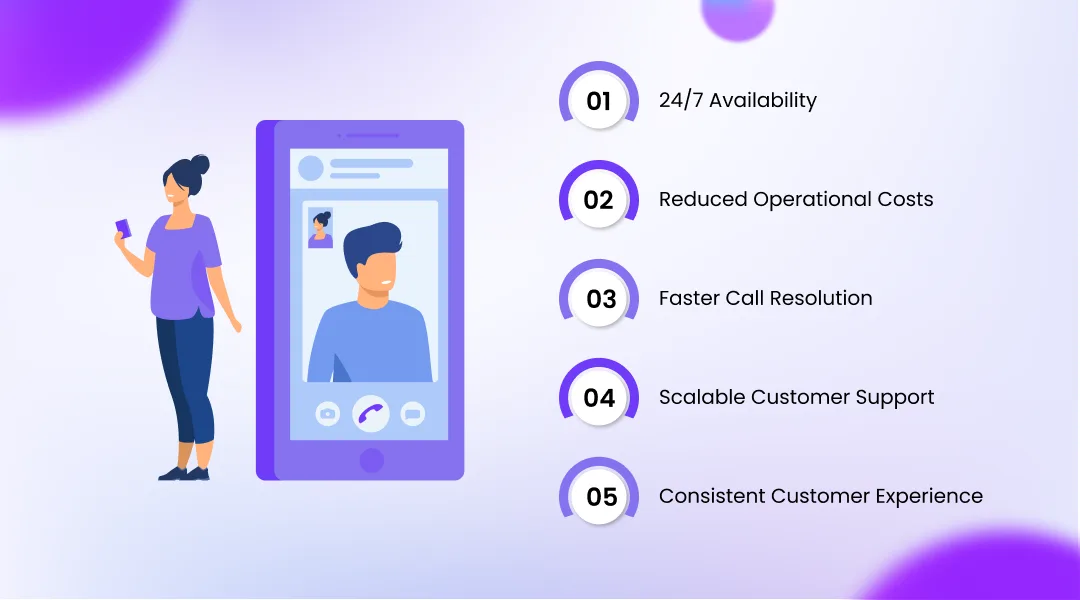
After working with dozens of automation projects, I’ve seen a consistent pattern.
When implemented correctly, businesses experience several immediate benefits.
24/7 Availability
Customers receive instant responses anytime.
No waiting. No hold music. No frustration.
Reduced Operational Costs
AI agents handle repetitive calls.
Human teams focus on complex cases.
The result? Lower support costs and higher productivity.
Faster Call Resolution
AI processes information instantly.
Which means customers get answers faster.
And faster service leads to higher satisfaction.
Scalable Customer Support
Holiday season?
Product launch?
Sudden spike in call volume?
AI systems scale effortlessly.
No hiring rush required.
Consistent Customer Experience
Human agents have off days.
AI systems don’t.
Every caller receives consistent, accurate responses.
Real-World Use Cases of AI Inbound Call Automation
Let’s move from theory to practice.
Here are some common scenarios where inbound call automation software shines.
Customer Support Automation
Businesses automate routine support calls such as:
- Password resets
- Account inquiries
- Basic troubleshooting
Agents handle the complicated cases.
Appointment Booking
Healthcare clinics, salons, and service businesses automate scheduling calls.
Customers simply say:
"I want to book an appointment tomorrow afternoon."
The AI checks availability and confirms the booking.
Order Tracking
E-commerce companies receive thousands of calls asking:
"Where is my order?"
AI can instantly retrieve shipping status and update customers.
Lead Qualification
Sales teams use AI virtual call agents to qualify inbound leads.
The system gathers details like:
- Customer requirements
- Budget range
- Timeline
Then routes qualified leads to sales representatives.
FAQ Call Handling
Many businesses receive repetitive calls asking the same questions.
AI answers these automatically, reducing support workload dramatically.
Step-by-Step Guide to Automating Inbound Calls with AI
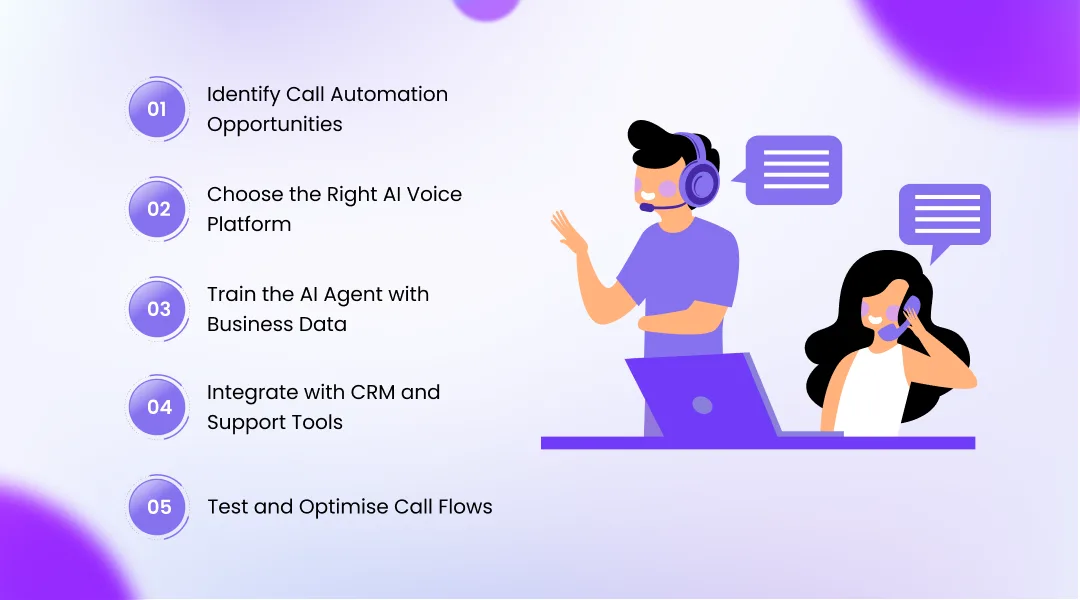
If you’re considering automation, here’s the process I recommend.
1. Identify Call Automation Opportunities
Start by analyzing call logs.
Which questions repeat most frequently?
Those are prime candidates for automation.
2. Choose the Right AI Voice Platform
Not all AI platforms are equal.
Look for providers specializing in conversational voice technology—like companies building AI Voice Agents designed for real business workflows.
3. Train the AI Agent with Business Data
Your AI needs context.
Provide it with:
- FAQs
- Product details
- Support documentation
- Call transcripts
This training shapes accurate responses.
4. Integrate with CRM and Support Tools
A powerful AI call handling system connects with:
- CRM platforms
- ticketing systems
- Order databases
That’s how it retrieves real-time information during calls.
5. Test and Optimise Call Flows
This step is critical.
Run pilot tests.
Review conversations.
Refine responses.
AI improves through iteration.
AI vs Human Agents: Finding the Right Balance
Here’s where many businesses make a mistake.
They assume automation means replacing humans.
That’s the wrong goal.
The real objective?
Balance.
AI handles:
- repetitive questions
- simple tasks
- high-volume requests
Humans handle:
- complex issues
- emotional conversations
- escalations
The smartest systems automatically transfer calls when needed.
Customers barely notice the transition.
Challenges Businesses Should Consider
Let’s be honest.
AI automation isn’t perfect.
There are challenges.
Ignoring them would be irresponsible.
Data Privacy
Voice systems process customer information.
Businesses must ensure strong security and compliance practices.
AI Training Accuracy
An AI agent is only as good as its training data.
Poorly trained systems lead to incorrect responses.
That damages trust quickly.
Customer Expectations
Some customers still prefer human interaction.
That’s why smooth human handoffs are essential.
Future of AI-Powered Call Automation
The next generation of voice AI is going to feel… different.
More human.
More contextual.
More autonomous.
We’re moving toward systems capable of:
- hyper-personalised conversations
- real-time sentiment detection
- fully autonomous task execution
Imagine calling a company and the AI already knows:
- your purchase history
- previous support cases
- your preferences
It responds like a well-informed assistant who remembers every interaction.
That future?
It’s arriving faster than most businesses expect.
Conclusion
I’ve watched customer communication evolve for more than a decade.
Email support. Live chat. Messaging apps.
Now voice AI.
And here’s my honest take.
Businesses that automate high-volume repetitive calls gain enormous operational breathing room.
Support teams focus on meaningful work.
Customers get faster responses.
Everyone wins.
But the technology must be implemented thoughtfully—with transparency, human oversight, and a genuine focus on improving customer experience.
That’s the difference between automation that frustrates people… and automation that quietly makes their day easier.