I’ve worked with businesses that spent lakhs on marketing.
Google Ads running. Social media active. Website polished.
And still… revenue leaking silently.
Why?
Because nobody answered the phone.
Not intentionally. Just reality. The owner was busy. The receptionist left early. Support lines got overwhelmed. Calls rang. Customers moved on.
Here’s the uncomfortable truth I’ve learned after 15 years working with communication technology:
A missed call is rarely retried.
Customers don’t wait anymore. They call the next business. And the next one answers.
This article isn’t about replacing humans. I don’t believe technology should erase human connection. My goal here is simpler:
Show you how to answer business calls automatically, without increasing staff, stress, or operational chaos.
Why Businesses Lose Customers Due to Missed Calls
Let me ask you something.
How many calls does your business miss every day?
Most owners guess wrong.
Studies consistently show businesses miss 25 - 40% of inbound calls, especially outside working hours. Nights. Weekends. Lunch breaks. Peak demand moments.
Now translate that into money.
If even 10 missed calls daily represent potential customers and only 3 convert, you’re losing revenue every single day without realizing it.
I once worked with a real estate company convinced marketing was failing. Leads were expensive. Conversions low.
We checked call logs.
Thirty-two unanswered calls. Per day.
Marketing wasn’t broken. Call handling was.
Missed calls create three invisible costs:
- Lost sales opportunities
- Damaged brand trust
- Frustrated customers who never return
And hiring more staff? Expensive. Difficult to scale. Impossible to maintain 24/7.
So businesses started asking a smarter question:
Can calls answer themselves?
Yes. They can.
What Is an Automatic Call Answering System?
Let’s remove the technical fog.
An automatic call answering system is software that answers incoming business calls instantly and interacts with customers using AI-powered voice conversations.
Think of it as a digital receptionist that:
- Picks up every call
- Speaks naturally
- Understands customer intent
- Provides information
- Routes calls when needed
- Captures leads automatically
Not robotic menus.
Not “Press 1 for English.”
Actual conversations.
Modern systems powered by conversational AI act like trained front-desk staff—except they never sleep, take breaks, or forget instructions.
Small businesses now use an AI phone answering system to handle inquiries without expanding teams.
And honestly? Many callers don’t even realize they’re speaking with AI.
How Automatic Business Call Answering Works
Here’s what happens behind the scenes when someone calls your business.
1. AI Voice Agents Answer Instantly
The call connects to an AI Voice Agent for Business trained on your company information.
No ringing. No waiting.
Immediate response.
2. Intent Understanding
The AI listens and understands why the customer called:
- Booking appointment
- Product inquiry
- Pricing question
- Support request
(It’s not guessing. It’s interpreting speech patterns.)
3. Smart Call Routing
Complex request?
The system transfers the call to the right human team member with full context attached.
No repetition. No frustration.
4. Automated Responses
Routine questions get answered instantly:
- Business hours
- Order status
- Service availability
- Appointment scheduling
That’s business call automation working quietly in the background.
Traditional Call Answering vs AI Call Automation
Let’s compare honestly.
Here’s the part most people don’t expect.
AI doesn’t replace staff—it protects them from repetitive work.
Your team handles meaningful conversations while automation manages volume.
Key Benefits of Automatically Answering Business Calls
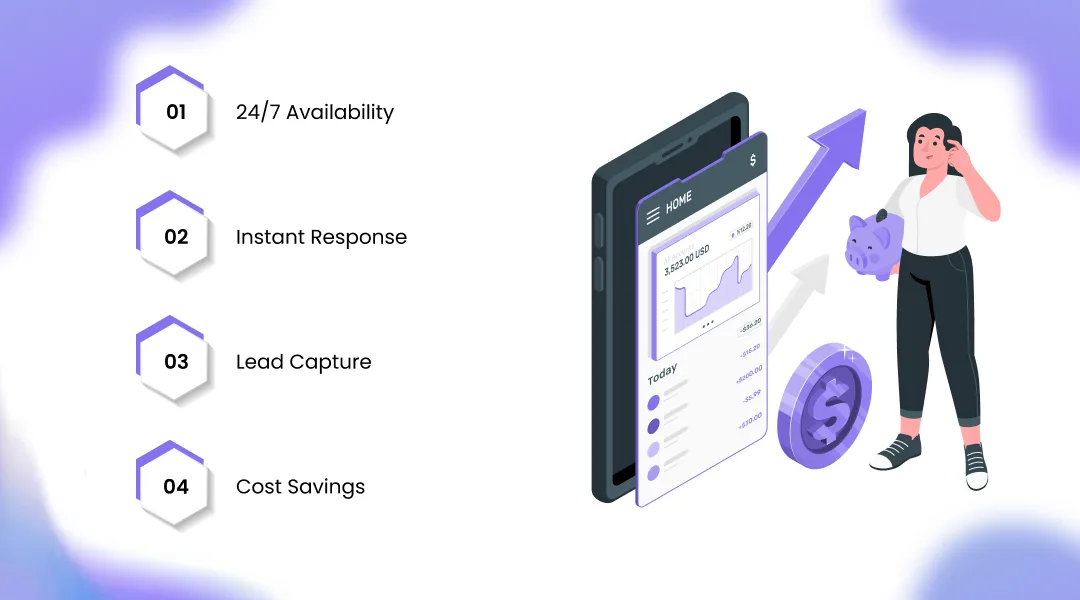
24/7 Availability
Customers call when convenient for them. Not you.
Automation ensures every call receives attention—even at 2 AM.
Instant Response
Speed builds trust.
A response within seconds dramatically increases conversion probability.
Lead Capture
Every caller becomes recorded business intelligence:
- Name
- Requirement
- Contact details
- Intent
No sticky notes. No forgotten leads.
Cost Savings
Hiring full-time reception staff costs significantly more than an automated phone answering system operating continuously.
And it scales without recruitment headaches.
Industries That Benefit Most from Auto Call Answering
I’ve seen adoption explode across industries dependent on inbound communication.
Healthcare
Appointment booking, patient inquiries, follow-ups.
Real Estate
Property inquiries answered instantly, before competitors respond.
E-commerce
Order tracking and customer support automation.
BPO & Call Centers
Overflow management without expanding workforce.
Service Businesses
Education institutes, finance firms, repair services, consultants.
Anywhere calls equal revenue… automation matters.
Features to Look for in an Automatic Call Answering Solution
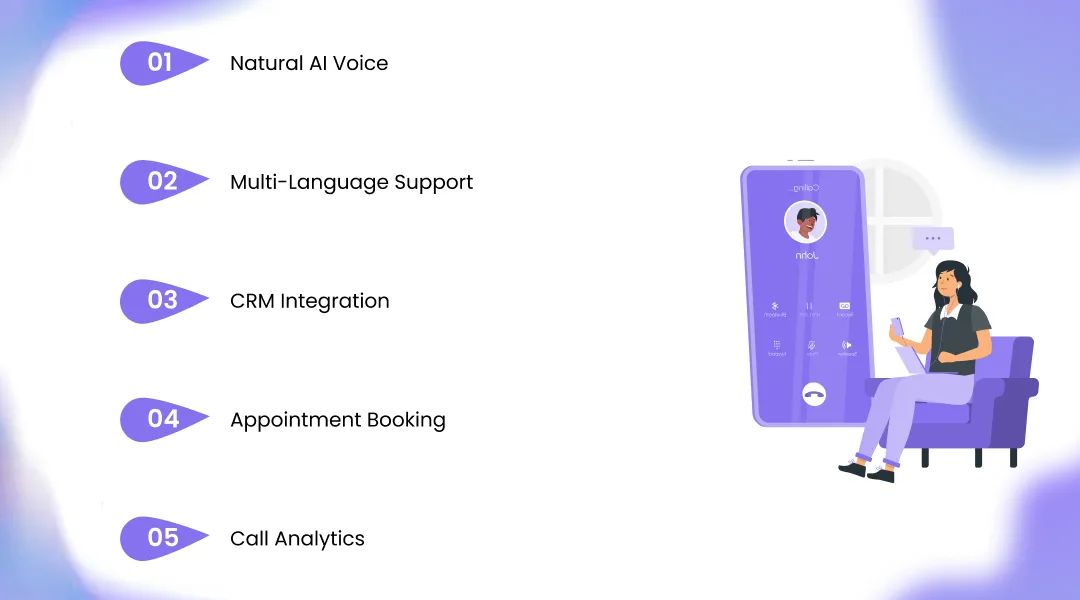
Not all systems are equal. Some still sound painfully robotic.
Here’s what I tell clients to check first.
Natural AI Voice
If it sounds artificial, customers disengage immediately.
Multi-Language Support
Especially critical in India’s multilingual market.
CRM Integration
Calls should update customer records automatically.
Appointment Booking
Direct calendar scheduling saves hours daily.
Call Analytics
You should know:
- Call volume
- Customer intent
- Missed opportunities
- Peak inquiry times
Data turns conversations into strategy.
Step-by-Step Guide to Automate Business Calls
You don’t need technical expertise. Seriously.
Step 1: Choose AI Call Software
Select a platform aligned with your business workflows.
Step 2: Setup Call Flow
Define common customer queries and responses.
Step 3: Train Responses
Upload FAQs, service details, pricing information.
Step 4: Integrate Business Data
Connect CRM, booking tools, or support systems.
Step 5: Go Live
Start small. Monitor performance. Improve continuously.
Most businesses deploy automation faster than expected.
Sometimes within days.
How AI Voice Agents Improve Customer Experience
Here’s something people rarely admit.
Customers don’t demand humans.
They demand resolution.
Fast answers. Clear information. Zero waiting.
AI voice assistants remove friction:
- No hold music
- No transfers loop
- No repeated explanations
And when human help is required, context transfers instantly.
That transition feels… smooth.
(Yes, customers notice.)
Common Mistakes Businesses Make While Handling Calls
I see these constantly.
Mistake 1: Assuming voicemail works (It doesn’t.)
Mistake 2: Underestimating after-hours calls Many purchase decisions happen outside office hours.
Mistake 3: Overloading staff Burnout increases errors.
Mistake 4: Ignoring call data Calls contain customer intent gold.
Automation fixes structure, not just workload.
Is Automatic Call Answering Safe & Reliable?
Short answer?
Yes, when implemented correctly.
Modern AI call systems include:
- Secure cloud infrastructure
- Encrypted conversations
- Controlled data access
- Performance monitoring
Reliability often exceeds manual handling because systems don’t fatigue or forget protocols.
Still skeptical?
Good. You should be.
Trust technology gradually. Start with inquiry handling before expanding automation scope.
Future of Business Communication with AI Call Automation
We’re moving toward conversational businesses.
Where customers talk naturallyand systems respond intelligently.
Soon:
- Calls will integrate with messaging platforms
- Voice assistants will predict customer needs
- Businesses will operate continuously without operational strain
And the companies answering first?
They win first.
Always have.
Conclusion
I’ve watched businesses transform not by adding more marketing—but by answering better.
Automatically answering calls isn’t about efficiency alone.
It’s about respect.
Respect for customer time. Respect for opportunity. Respect for growth.
If your phone still rings unanswered, automation isn’t optional anymore.
It’s operational survival.
And honestly?
The businesses adopting AI call answering today will look incredibly prepared tomorrow.