Let me start with a confession.
For years, I thought most “AI for education” claims were… optimistic. Polite word.
I’ve worked with enough technology teams to know how these projects usually begin:
A university launches admissions. Phones explode with inquiries. Emails pile up. Support staff burns out.
Then someone says, “Let’s add a chatbot.”
Six months later? Students are still waiting for answers.
Because here’s the uncomfortable truth:
Education doesn’t just need automation. It needs communication that feels human.
That’s where AI Voice Assistant for Education starts making sense.
And when implemented correctly (I’ve seen both good and terrible implementations), it changes how institutions interact with students entirely.
Not theory.
Reality.
What is an AI Voice Assistant for Education?
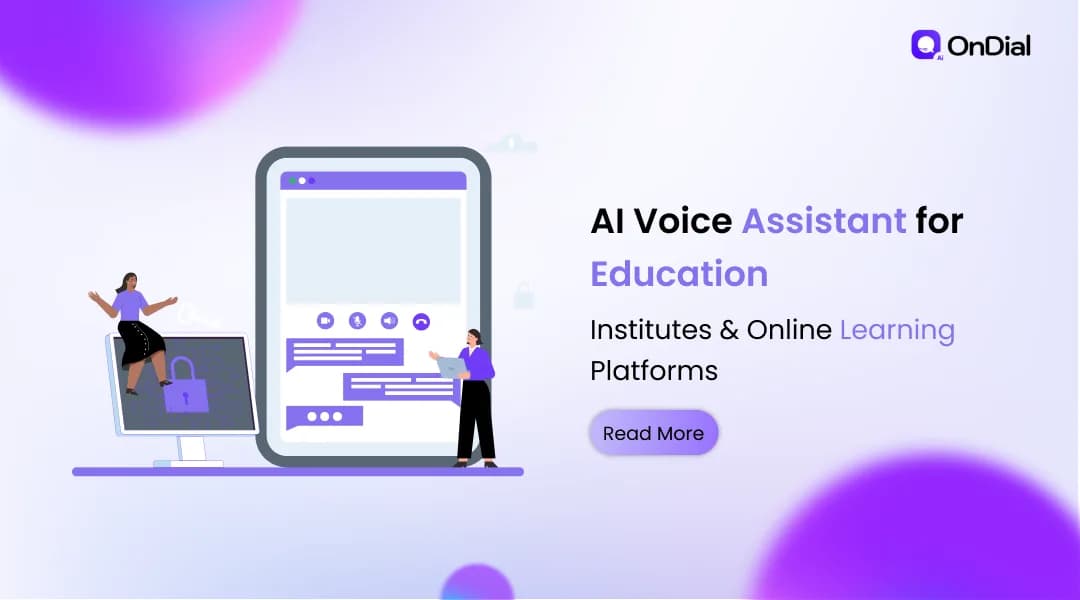
An AI Voice Assistant for Education Institutes is an intelligent system that communicates with students using natural conversation through voice calls.
Think of it as a digital front desk that never sleeps.
It can:
- Answer admission inquiries
- Provide course information
- Assist with exam schedules
- Support students 24/7
- Guide learners on online platforms
But here’s the part most blog posts skip.
A real AI voice bot for schools is not just reading scripts.
Modern systems use:
- Natural language understanding
- contextual conversations
- student intent detection
- integrations with university databases or LMS platforms
Which means students can ask:
"When does admission close for the MBA program?"
And receive a clear answer.
No forms. No waiting. No frustration.
Just information.
Immediately.
Why Education Institutes Need AI Voice Assistants
Let me ask you something.
How many times does a university receive the same questions?
- Admission deadlines
- Course fees
- Eligibility criteria
- Exam schedules
- Scholarship information
Thousands.
Every year.
Support teams end up repeating the same answers again and again.
I once worked with an admissions department that received 12,000 calls in three weeks.
Twelve thousand.
Their team had six people.
Do the math.
This is why voice AI for educational institutes matters.
It handles repetitive conversations so human teams can focus on situations that actually require judgment.
Not repetition.
Key Features of AI Voice Assistants for Schools & EdTech
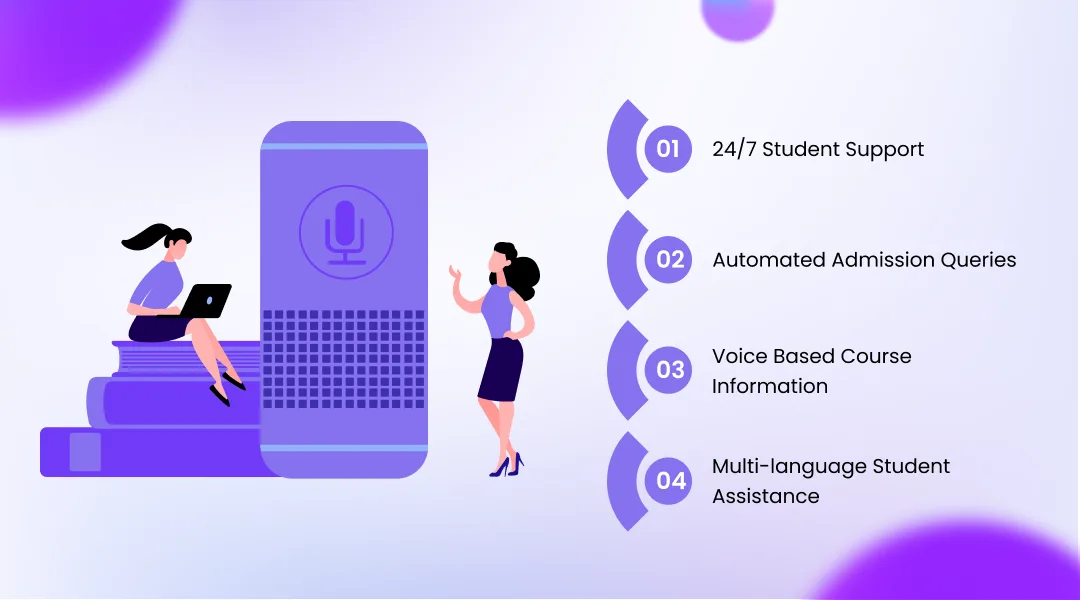
24/7 Student Support
Students don’t ask questions between 9 AM and 5 PM.
They ask them at:
- midnight
- early morning
- weekends
- during exams
A well-built AI student support automation system answers calls anytime.
And students don’t wait.
Ever.
Automated Admission Queries
Admission season is chaos.
Every institute experiences:
- repeated admission questions
- incomplete inquiries
- missed calls
An AI call assistant for universities can answer questions like:
- application deadlines
- required documents
- eligibility criteria
- program availability
Automatically.
And when a call requires human attention?
It forwards it to the right department.
Simple.
Voice Based Course Information
Many students don’t want to browse ten web pages to understand a program.
They want answers.
Now.
With a voice AI for online courses, students can simply ask:
“Tell me about the data science course.”
The assistant explains:
- duration
- eligibility
- fees
- curriculum overview
In seconds.
Multi-language Student Assistance
This one is huge in countries like India.
Students speak different languages.
English. Hindi. Regional languages.
A modern AI voice bot for student queries can support multiple languages so students feel comfortable asking questions.
And that matters more than most institutions realize.
Use Cases of AI Voice Assistants in Education
Student Admission Assistance
Admissions teams often drown in inquiries.
Voice assistants can:
- guide students through application processes
- explain admission requirements
- provide program details
All without human intervention.
Course Information Automation
Students researching programs often ask similar questions.
A voice AI for EdTech platforms can explain:
- course curriculum
- instructor details
- certification information
No waiting.
Exam & Schedule Updates
Students frequently call institutions asking about:
- exam dates
- class schedules
- holiday notices
An AI phone agent for education institutes can deliver these updates instantly.
And consistently.
Online Learning Platform Support
Online education platforms receive thousands of support requests.
Questions like:
- “How do I access my course?”
- “Why can't I log in?”
- “Where are my assignments?”
An AI virtual assistant for LMS can resolve these quickly.
Which reduces pressure on support teams.
Benefits of AI Voice AI for Educational Institutions
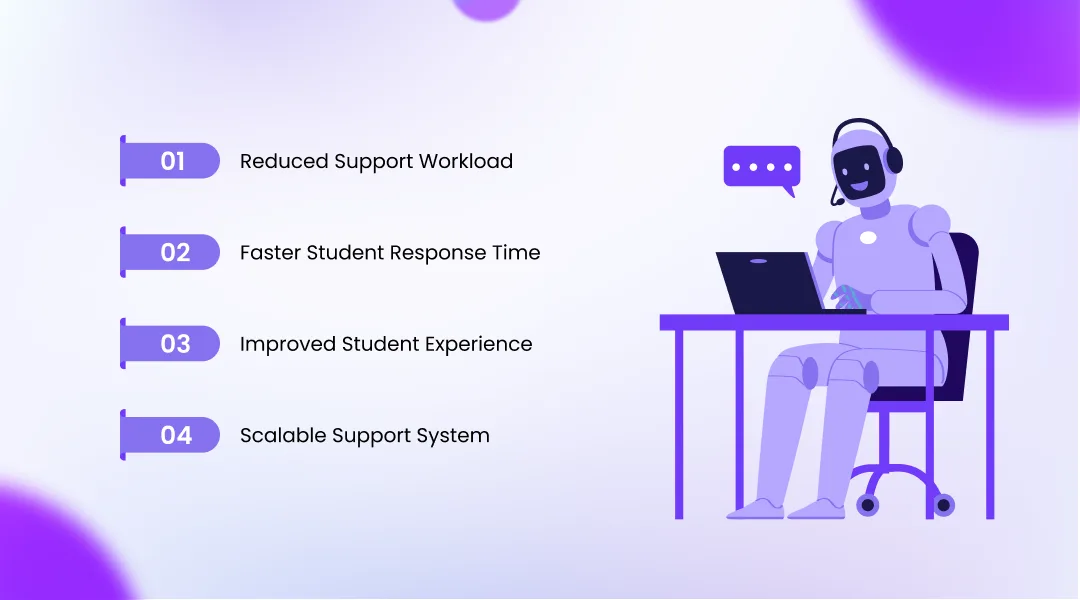
Reduced Support Workload
This is the first benefit everyone notices.
Voice assistants handle repetitive conversations automatically.
Admissions teams finally breathe again.
Faster Student Response Time
Students today expect instant answers.
Waiting hours or days for email replies?
Unacceptable.
Voice AI responds immediately.
Improved Student Experience
Students judge institutions by how responsive they are.
Fast answers = better perception.
And trust.
Scalable Support System
Student inquiries spike during admissions or exams.
Voice systems scale easily.
No hiring temporary staff.
No overload.
Just consistent communication.
AI Voice Assistants for Online Learning Platforms
EdTech companies face a slightly different challenge.
Scale.
Online platforms may have tens of thousands of students globally.
That means:
- login issues
- course navigation questions
- subscription inquiries
- technical support requests
I’ve worked with EdTech platforms where support teams simply couldn't keep up.
The introduction of AI Voice Agents for Education transformed their support structure.
Students received answers immediately.
Human agents focused on complex technical issues.
Everyone wins.
How AI Voice Automation Improves Student Engagement
Here’s something fascinating.
Students talk more than they type.
Voice interactions feel natural.
And when communication becomes easier, students engage more.
I’ve seen students:
- ask more questions
- explore more courses
- complete enrollment faster
All because getting answers felt effortless.
(And yes… sometimes students even say thank you to the voice assistant.)
How to Implement AI Voice Assistant in Education Institutes
Let’s keep this practical.
Implementing voice AI usually follows a few steps.
1. Identify high-volume student queries
Start with the most common questions:
- admissions
- course information
- schedules
Automation works best here.
2. Integrate with existing systems
Voice assistants connect with:
- university databases
- CRM platforms
- LMS systems
This allows them to provide real information.
Not guesses.
3. Train the assistant
Voice systems improve when trained with real student queries.
The more data they process, the better conversations become.
4. Launch with transparency
Students should know they are interacting with an AI assistant.
Clear communication builds trust.
And trust matters.
Companies like OnDial focus heavily on human-centric conversational design, which is why many institutions choose partners with real voice AI expertise rather than generic automation vendors.
Future of AI Voice Technology in Education
Let’s talk about where this is heading.
Voice assistants are evolving fast.
Future systems will likely include:
- personalized student guidance
- voice-driven learning support
- AI tutors integrated into LMS platforms
- proactive reminders for assignments and exams
Imagine a student asking:
"What should I study next?"
And receiving personalized recommendations.
We’re closer to that reality than most people think.
Conclusion
Education institutions face a communication challenge.
Too many questions. Too few support staff. Too little time.
Voice AI solves that problem in a surprisingly human way.
Not by replacing people.
But by handling repetitive conversations so humans can focus on meaningful interactions.
And when implemented thoughtfully, AI Voice Assistant for Education Institutes & Online Learning Platforms becomes something powerful.
Not just automation.
A better student experience.