Let me start with a confession.
I’ve sat in university admin offices during admission season.
Phones ringing. Nonstop. Parents asking the same five questions. Students emailing because nobody answered the phone. Support teams trying to keep up with spreadsheets, portals, and hundreds of inquiries.
It’s chaos.
And the weird part? Most of those conversations are identical.
“What’s the admission deadline?” “How do I pay the application fee?” “When will exam results be announced?”
Now imagine hiring a staff member whose only job is to answer those questions. Twenty-four hours a day. In multiple languages. Without ever getting tired.
That’s essentially what AI voice agents do.
I’ve watched institutions deploy them and turn communication bottlenecks into smooth, scalable systems. Not hype. Not theory. Actual operations are getting easier.
But first, let’s understand what we’re talking about.
What Are AI Voice Agents?
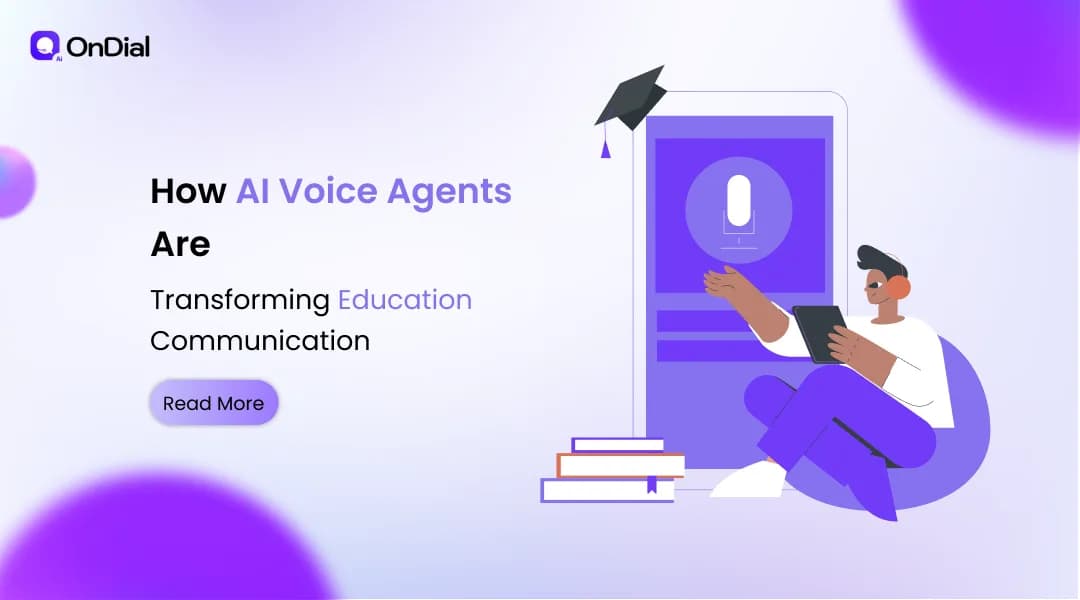
An AI voice agent is an automated system that can understand spoken language, process the request, and respond naturally, just like a human support representative.
Except it doesn’t need coffee breaks.
Or sleep.
Or three additional staff members during admission week.
Technically speaking, voice agents combine several AI components:
- Speech recognition (understanding spoken words)
- Natural language understanding (interpreting intent)
- Dialogue management (deciding the response)
- Text-to-speech (speaking back naturally)
When integrated into education systems, these agents can answer calls, provide information, and guide students through processes automatically.
Simple example.
A student calls the university.
Instead of waiting in a queue, they hear:
"Hi! I can help with admissions, fees, or course information. What would you like to know?"
The student asks about application deadlines.
The system instantly responds with accurate information pulled from the institution’s database.
Fast. Accurate. Consistent.
And that’s why AI Voice Agents for Education are quickly becoming essential communication tools.
But the real story begins with the problems they solve.
Key Communication Problems in Education
Before anyone installs new technology, I always ask one question:
“What exactly is broken?”
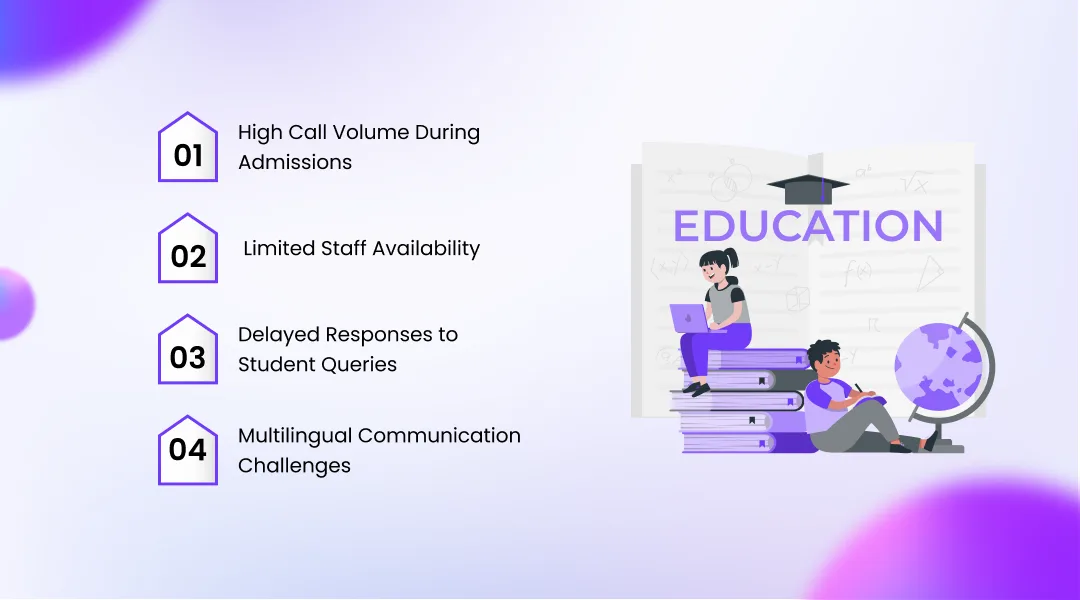
Education institutions tend to have the same four communication bottlenecks.
Let’s break them down.
1. High Call Volume During Admissions
Admissions season is… intense.
Phones ring constantly. Emails flood inboxes. Parents and students request the same information repeatedly.
A small admissions team suddenly faces thousands of inquiries.
Response delays become inevitable.
And delays create frustration.
2. Limited Staff Availability
Here’s the uncomfortable truth.
Most universities don't have large support teams.
Which means:
- calls go unanswered
- emails wait hours (or days)
- support teams burn out
Students expect instant responses.
Institutions often can't deliver them.
3. Delayed Responses to Student Queries
Students today grew up with instant messaging.
Waiting two days for a reply feels ancient.
Yet many institutions still rely on:
- manual email responses
- overloaded call centers
- limited office hours
Communication slows down.
Student satisfaction drops
4. Multilingual Communication Challenges
Education is global.
Students call from different regions. Different languages. Different accents.
Hiring multilingual support staff for every possible scenario?
Not practical.
This is where voice AI becomes particularly useful.
Because it can communicate in multiple languages without hiring multiple teams.
How AI Voice Agents Improve Education Communication
Now we get to the interesting part.
What actually changes when institutions adopt voice AI?
Quite a lot.
24/7 Student Support
Students don't just call during office hours.
They call:
- late evenings
- weekends
- exam periods
- right before application deadlines
AI voice agents answer every call.
At any time.
No queues. No missed calls.
Just answers.
Instant Response to Admission Inquiries
Admissions questions are incredibly repetitive.
Deadlines. Requirements. Documents.
Voice agents can answer these instantly.
Better yet, they can guide applicants step-by-step:
- explaining eligibility requirements
- sharing application links
- confirming fee payment instructions
It’s like having an admissions assistant on every phone line simultaneously.
Automated FAQs for Students & Parents
Parents call with different concerns than students.
Tuition fees. Hostel facilities. Safety. Scholarships.
AI voice assistants can address these questions automatically.
Which means support teams spend less time repeating information and more time solving complex issues.
Multilingual Voice Communication
This one is huge.
Voice AI can speak multiple languages fluently.
English. Hindi. Regional languages.
Students feel more comfortable asking questions in their preferred language.
And institutions suddenly become more accessible.
Use Cases of AI Voice Agents in Education
Let’s move from theory to practical scenarios.
Where exactly do voice agents help?
Admission Inquiry Automation
This is the most common use case.
AI voice systems answer questions like:
- eligibility requirements
- application deadlines
- entrance exam information
- admission procedures
Thousands of inquiries handled automatically.
Admissions teams finally breathe again.
Fee & Enrollment Assistance
Students often call about payment issues.
Voice agents can:
- explain fee structures
- guide payment steps
- confirm transactions
- provide enrollment instructions
No waiting for staff.
Immediate help.
Student Helpline Automation
Universities receive daily support calls about:
- course schedules
- exam dates
- campus services
- administrative procedures
AI voice assistants handle these inquiries instantly.
And escalate complex issues to human staff when necessary.
Exam and Schedule Updates
Students constantly ask:
“When is my exam?”
Voice agents can provide:
- exam schedules
- class updates
- timetable changes
- result announcements
All in real time.
Benefits for Schools, Colleges, and Universities
When institutions deploy voice AI effectively, the results are noticeable.
Immediately.
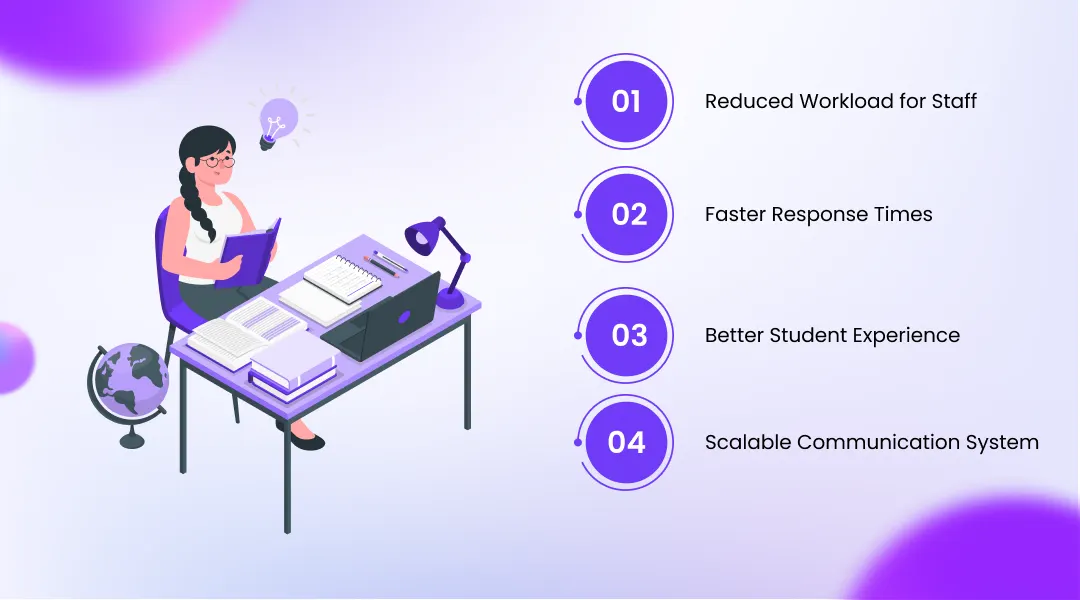
Reduced Workload for Staff
Support teams stop answering the same questions all day.
Instead, they focus on complex student needs.
Morale improves.
Productivity improves.
Everyone wins.
Faster Response Times
Students get answers instantly.
No hold music.
No email delays.
Just information when they need it.
Better Student Experience
Communication quality shapes institutional reputation.
Fast, clear responses create a positive experience.
And happy students talk.
Scalable Communication System
Here’s something administrators appreciate.
AI voice systems scale effortlessly.
Whether there are 100 calls or 10,000 calls, the system handles them all.
No additional hiring required.
Real-World Examples of AI Voice Agents in Education
I’ve worked with several institutions exploring conversational AI solutions.
The patterns are consistent.
EdTech platforms use voice agents to assist students with course navigation.
Universities deploy them during admissions to answer applicant inquiries.
Online learning platforms integrate voice systems to provide technical support.
One EdTech startup I advised reduced support call wait times by over 70% after deploying voice automation.
Not because they replaced staff.
But because repetitive queries were handled automatically.
The human team finally had time for meaningful conversations.
Integration with Existing Education Systems
Whenever I discuss voice AI with IT leaders, the first concern is always the same.
“Will this break our current systems?”
Fair question.
Fortunately, modern voice AI platforms integrate with existing infrastructure.
LMS Integration
Voice agents can connect with Learning Management Systems to:
- provide course information
- assist students with login issues
- guide learners through course navigation
CRM Integration
When connected to CRM platforms, voice agents can:
- access student profiles
- track inquiries
- personalize responses
Students receive relevant information instead of generic answers.
Student Information Systems
Voice AI can pull data directly from student databases.
Which means it can provide:
- enrollment status
- exam schedules
- course registrations
Accurate information. Instantly
The Future of AI Voice Technology in Education
Let me share where this is heading.
Because we’re just getting started.
Personalized Student Communication
Voice agents will soon recognize returning students.
They’ll know past interactions.
And respond with personalized assistance.
Voice-Based Learning Assistants
Imagine students asking questions about coursework and receiving explanations instantly.
Not just administrative help.
Academic support too.
AI Powered Education Support Ecosystems
The future isn't one isolated voice assistant.
It's a connected support ecosystem where:
- voice
- chat
- messaging
- knowledge bases
all work together.
Students move between channels without losing context.
Communication becomes fluid.
Natural.
Human-like.
Conclusion
Education institutions are facing a communication paradox.
Student expectations keep rising.
Support resources often stay the same.
That gap creates frustration on both sides.
I’ve seen firsthand how voice AI closes that gap.
Not by replacing people.
But by removing repetitive communication barriers.
When voice agents handle routine inquiries, staff can focus on what actually matters: helping students succeed.
And students?
They simply get answers faster.
Which, honestly, is what they wanted all along.