Let me start with something blunt.
Most call centers aren’t struggling because of bad agents.
They’re struggling because the system around those agents is broken.
Long hold times. Endless IVR menus. Overworked support teams trying to handle 10,000 calls a day.
I’ve spent years working with companies trying to modernize voice systems. And the same pattern always appears.
The business grows. Customer calls increase. The support team expands. Costs explode.
And then leadership asks the obvious question:
“Is there a smarter way to handle this?”
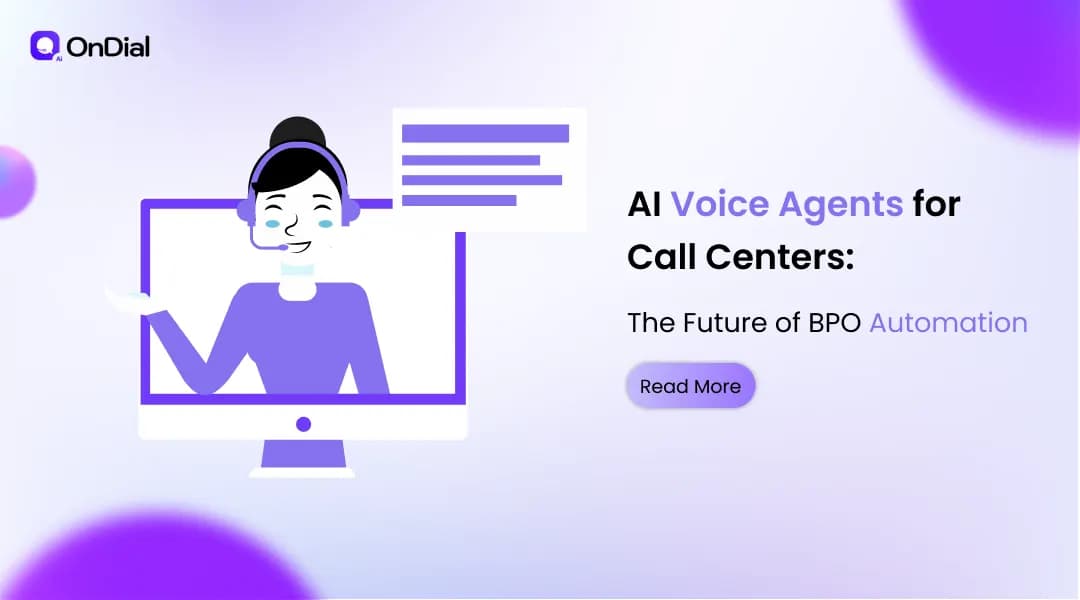
That question is exactly why AI voice agents for call centers are becoming one of the most talked-about shifts in BPO automation.
But here’s the important part.
This isn’t about replacing humans.
It’s about redesigning how voice communication works.
What Are AI Voice Agents?
An AI voice agent is a conversational system that can answer phone calls, understand human speech, and respond naturally in real time.
Not a robotic menu.
Not a “Press 1 for sales” nightmare.
A real conversation.
These agents combine several technologies:
- Speech recognition
- Natural language understanding
- Dialogue management
- Text-to-speech synthesis
Together, they allow machines to handle phone conversations almost like a trained support representative.
I've personally worked on voice systems where callers didn’t even realize the first interaction was automated.
Pause for a moment and think about that.
A machine answering thousands of calls… without sounding like one.
That’s where AI call center automation is heading.
How AI Voice Agents Work in Call Centers
Under the hood, the process looks something like this.
When a customer calls:
- Speech Recognition The system converts spoken words into text.
- Intent Detection AI analyzes what the caller actually wants.
- Conversation Logic The agent determines the correct response or action.
- Voice Response The system replies using natural-sounding speech.
If the problem becomes complex?
The AI transfers the call to a human agent with full context.
Which means the customer doesn’t repeat everything again.
Small detail.
Massive improvement.
Key Benefits of AI Voice Agents for BPO Automation
Let’s talk about the practical benefits.
Not the marketing promises.
The operational ones.
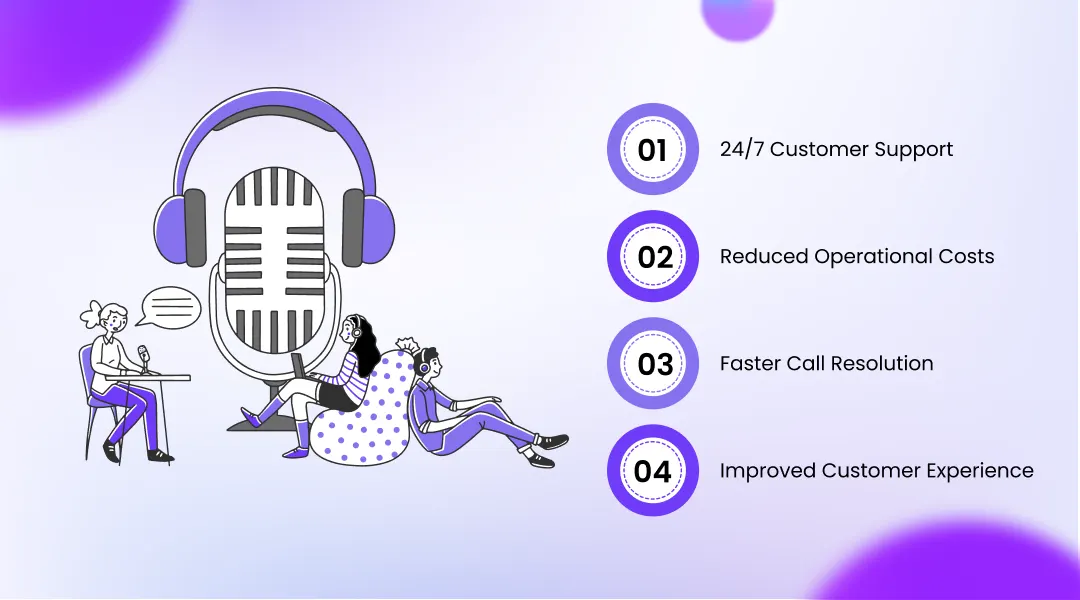
24/7 Customer Support
Customers call at all hours.
Support teams don’t.
AI voice agents handle inquiries anytime without increasing staffing costs.
No night shifts. No burnout. No missed calls.
Reduced Operational Costs
Call centers are expensive.
Hiring, training, infrastructure, management.
AI voice agents reduce the number of routine calls handled by humans.
The result?
Smaller teams focused on complex problems.
Faster Call Resolution
Many customer requests are predictable:
- Order status Account balance
- Appointment confirmation
- Basic troubleshooting
AI voice agents process these requests instantly.
No waiting.
No queues.
Improved Customer Experience
Let me ask you something.
When was the last time you enjoyed calling customer support?
Exactly.
AI voice agents remove friction by providing faster answers and eliminating unnecessary menu navigation.
Customers simply say what they need.
And the system responds.
AI Voice Agents vs Traditional IVR Systems
Traditional IVR systems were built decades ago.
They follow rigid paths.
Press 1. Press 2. Press 9 if you're frustrated.
AI voice agents work differently.
Instead of forcing customers into menus, they understand natural speech.
A customer can say:
“Hey, I want to check my order status.”
And the system handles it.
No button pressing.
No confusion.
Traditional IVR systems feel like talking to a vending machine.
AI voice agents feel like talking to support.
AI Voice Agents vs Human Call Center Agents
Now let’s address the elephant in the room.
Will AI replace human agents?
Short answer.
No.
Longer answer?
AI removes repetitive calls so humans can focus on complex conversations.
Think about the average call center workload.
A huge percentage of calls are routine.
Password resets. Delivery updates. Appointment confirmations.
AI voice agents handle those instantly.
Human agents step in when empathy, negotiation, or complex troubleshooting is required.
It’s not replacement.
It’s division of labor.
Use Cases of AI Voice Agents in Call Centers
The best way to understand this technology is through real applications.
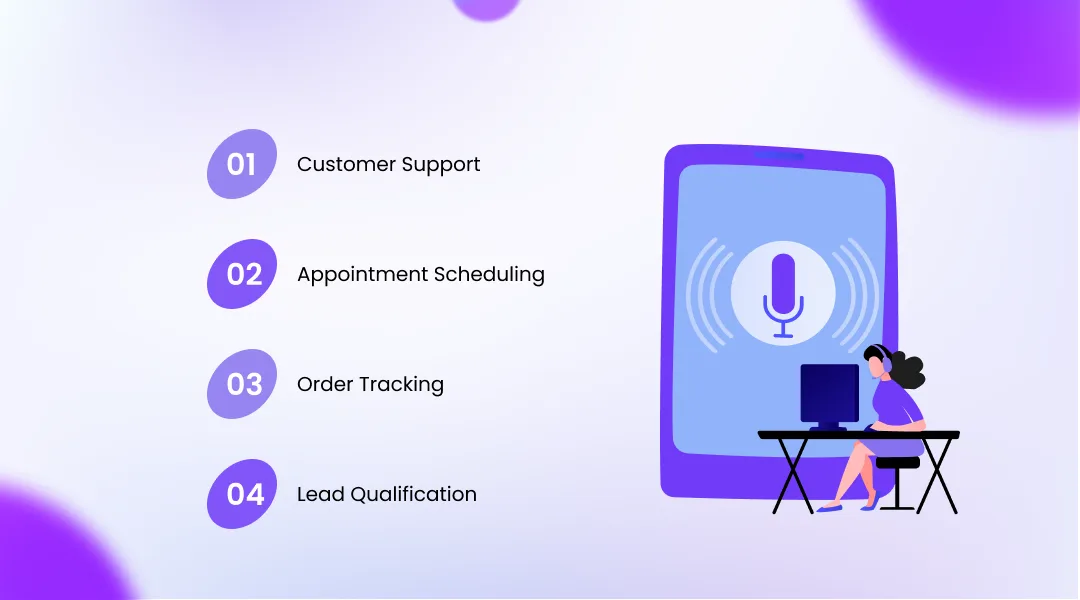
Customer Support
AI agents answer common service questions instantly.
Which means fewer waiting queues.
Appointment Scheduling
Healthcare providers and service businesses use AI voice agents to schedule appointments automatically.
No human intervention needed.
Order Tracking
E-commerce companies handle thousands of “Where is my order?” calls daily.
AI agents access order systems and provide updates instantly.
Lead Qualification
Sales teams receive hundreds of inbound inquiries.
AI voice agents gather details before transferring leads to human representatives.
(Interestingly, we’ve seen similar workflows used in niche sectors like AI Voice Agents for Real Estate, where property inquiries and appointment scheduling can be automated efficiently.)
How AI Voice Agents Improve Call Center Efficiency
Efficiency in a call center comes down to three metrics:
- Average handling time
- First call resolution
- Agent utilization
AI voice agents improve all three.
Routine calls disappear from the queue.
Human agents spend time where they add the most value.
And customers receive faster answers.
I’ve seen companies reduce call center load by 30–50% after implementing conversational AI.
Not theory.
Real deployments.
Industries Using AI Voice Agents Today
AI voice automation isn’t limited to one industry.
It’s spreading fast.
E-commerce
Handling order tracking, refunds, and delivery inquiries.
Healthcare
Scheduling appointments and patient reminders.
Banking
Account balance checks, fraud alerts, and transaction verification.
Telecom
Troubleshooting connectivity issues and billing inquiries.
Each industry has repetitive voice workflows.
AI agents handle them beautifully.
Challenges and Limitations of AI Voice Agents
Let’s keep this honest.
AI voice technology isn’t perfect.
Some challenges include:
- Handling complex or emotional conversations
- Integration with legacy systems
- Training the AI with real call data
- Customer trust in automated interactions
If implemented poorly, AI voice systems can frustrate users.
I’ve seen it happen.
Which is why human-centric design matters.
Voice AI should assist people.
Not trap them in automation loops.
The Future of BPO Automation with AI Voice Technology
The call center industry is undergoing a quiet revolution.
Not flashy.
But profound.
Voice AI systems are becoming:
- More conversational
- More context aware
- More multilingual
Future AI voice agents will remember previous conversations, adapt tone, and assist human agents in real time.
In many ways, we’re moving toward hybrid call centers.
Humans plus AI.
Working together.
How Businesses Can Implement AI Voice Agents
If you're considering voice AI, start with a practical approach.
Step 1: Identify repetitive call types.
Step 2: Map customer conversation flows.
Step 3: Train AI systems with real call data.
Step 4: Integrate with CRM and backend systems.
Step 5: Launch gradually with human fallback.
This phased approach reduces risk while improving automation outcomes.
Companies like OnDial specialize in building tailored conversational AI systems designed for real-world communication workflows—not generic voice bots.
And that difference matters more than most people realize.
Conclusion
Call centers aren’t disappearing.
They’re evolving.
AI voice agents are simply the next stage in that evolution.
Not a replacement for people.
But a tool that removes repetitive work and allows human agents to focus on meaningful conversations.
After years working with voice technology, I’ve learned one thing.
The best automation doesn’t feel like automation.
It feels like good service.
And that’s exactly where AI voice agents are heading.